
Description
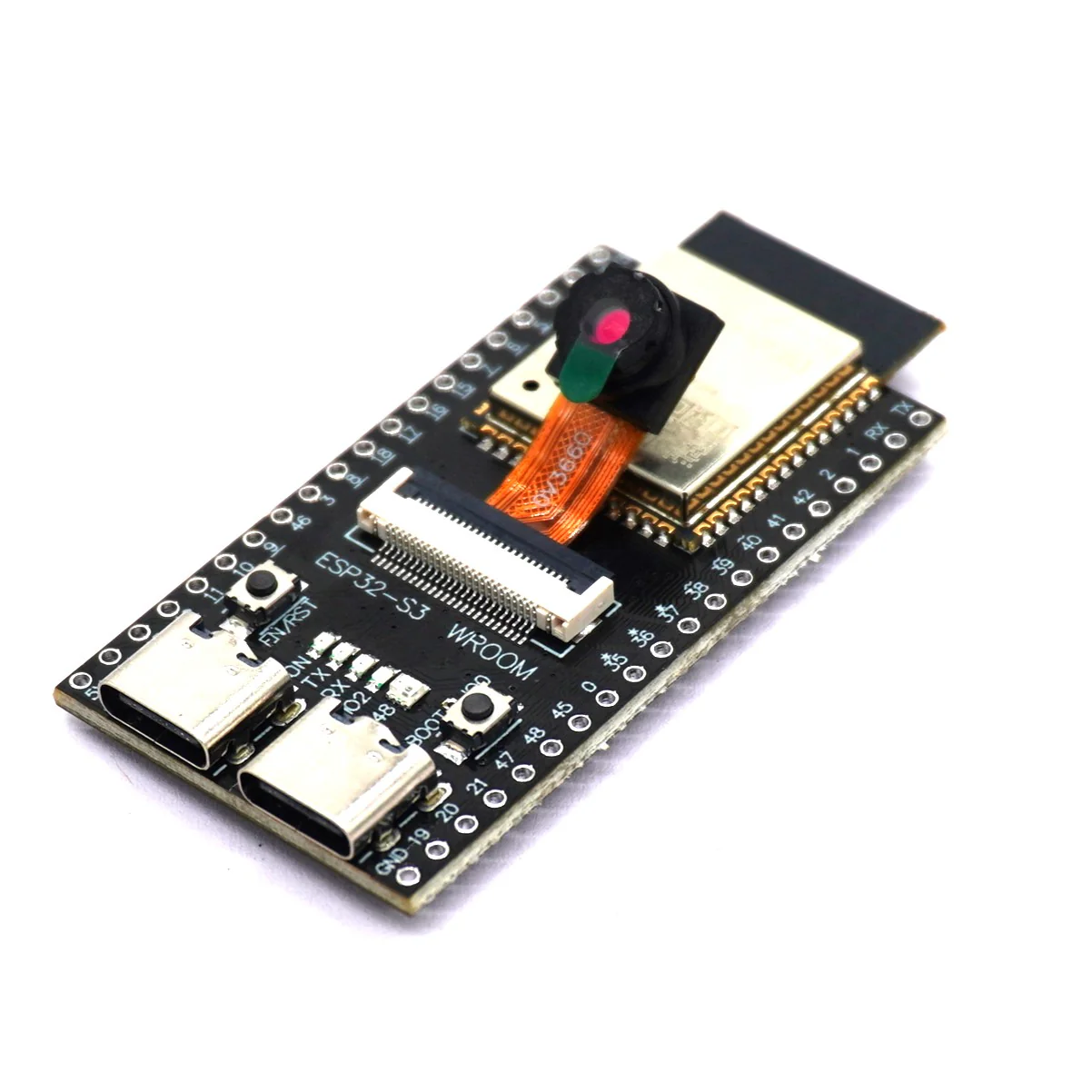
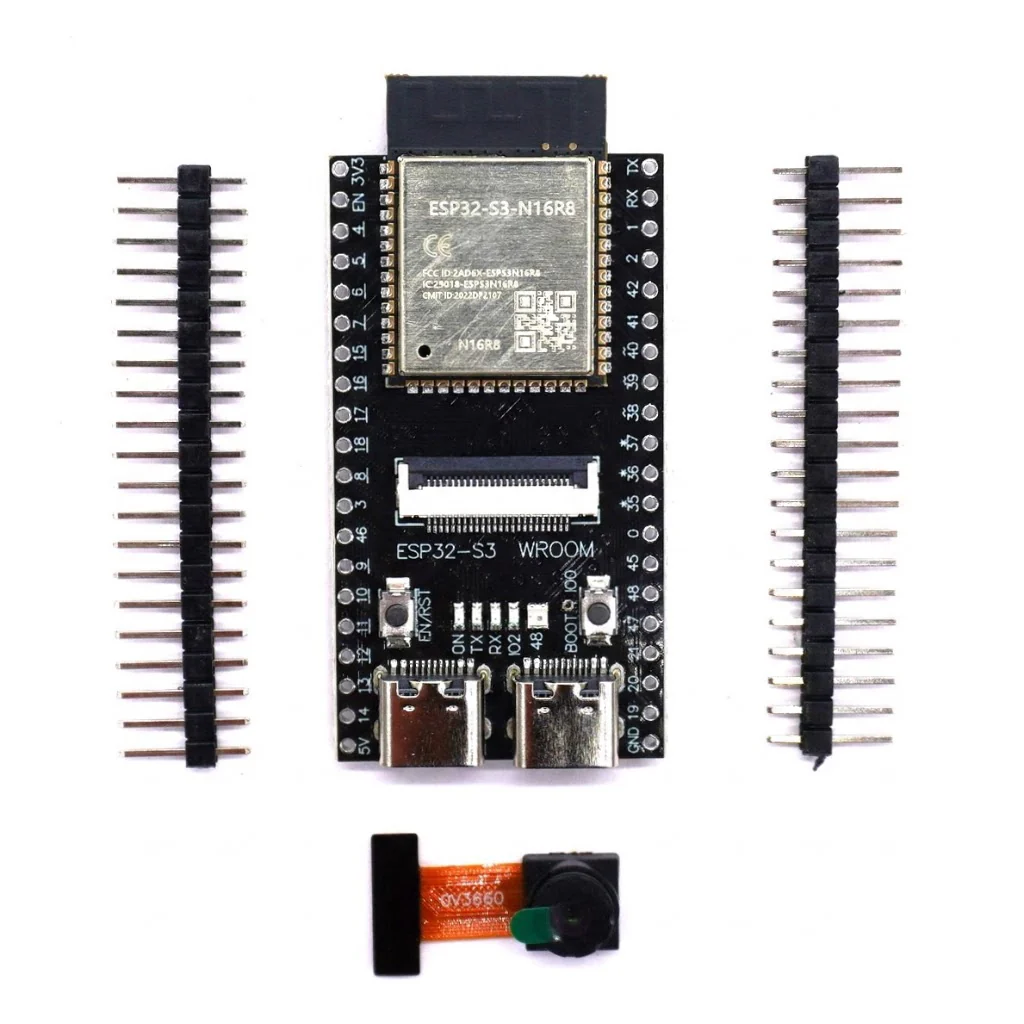
The N16R8 ESP32-S3 CAM Development Board combines high-performance processing, wireless connectivity, and a 2MP OV2640 camera module in a compact package. Based on the ESP32-S3, it offers dual-core Xtensa LX7 CPUs, integrated WiFi (802.11 b/g/n), and Bluetooth 5 with Mesh support, making it perfect for next-gen IoT, AI, and vision-based applications.
Its dual Type-C ports simplify power and programming, while 8MB PSRAM ensures smooth image and video processing. The onboard camera interface (DVP) and LCD support make it suitable for DIY surveillance systems, robotics, and AI-enabled projects.
Features
- ESP32-S3 dual-core processor (Xtensa LX7)
- 384KB ROM, 512KB SRAM, 16KB RTC SRAM, 8MB PSRAM
- Supply voltage: 3V–3.6V
- 45 GPIOs for flexible interfacing
- Analog: 2×12-bit SAR ADC (20 channels), temperature sensor
- Digital Interfaces: 4×SPI, 3×UART, 2×I2C, 2×I2S, RMT, GDMA, TWAI (CAN 2.0)
- Multimedia: LCD (8/16-bit RGB), DVP camera input, 8-ch PWM
- Connectivity: WiFi (150 Mbps), Bluetooth 5 + Mesh
- Camera: OV2640, 2MP
- USB OTG + USB Serial/JTAG
- Temperature range: -40°C to +65°C
- Board dimensions: 57mm × 28mm
Applications
- IoT camera systems
- Smart surveillance and security
- AI vision recognition
- Face/object detection
- Robotics and automation
- Wireless video streaming
- DIY smart home projects
Technical Specifications
| Parameter | Value |
|---|---|
| Processor | ESP32-S3 Dual-Core Xtensa LX7 |
| ROM | 384KB |
| SRAM | 512KB |
| RTC SRAM | 16KB |
| PSRAM | 8MB |
| Voltage Range | 3V – 3.6V |
| GPIOs | 45 |
| ADC | 2 × 12-bit SAR ADC (20 channels) |
| Digital Interfaces | 4×SPI, 3×UART, 2×I2C, 2×I2S, RMT, GDMA, CAN |
| Camera Interface | DVP (OV2640 supported) |
| Camera | OV2640, 2MP |
| LCD Support | 8/16-bit RGB |
| PWM Channels | 8 |
| WiFi | IEEE 802.11 b/g/n, up to 150 Mbps |
| Bluetooth | Bluetooth 5 + Mesh |
| USB Support | Dual Type-C, USB OTG, USB Serial/JTAG |
| Operating Temperature | -40°C to +65°C |
| Dimensions | 57mm × 28mm |
Package Contents
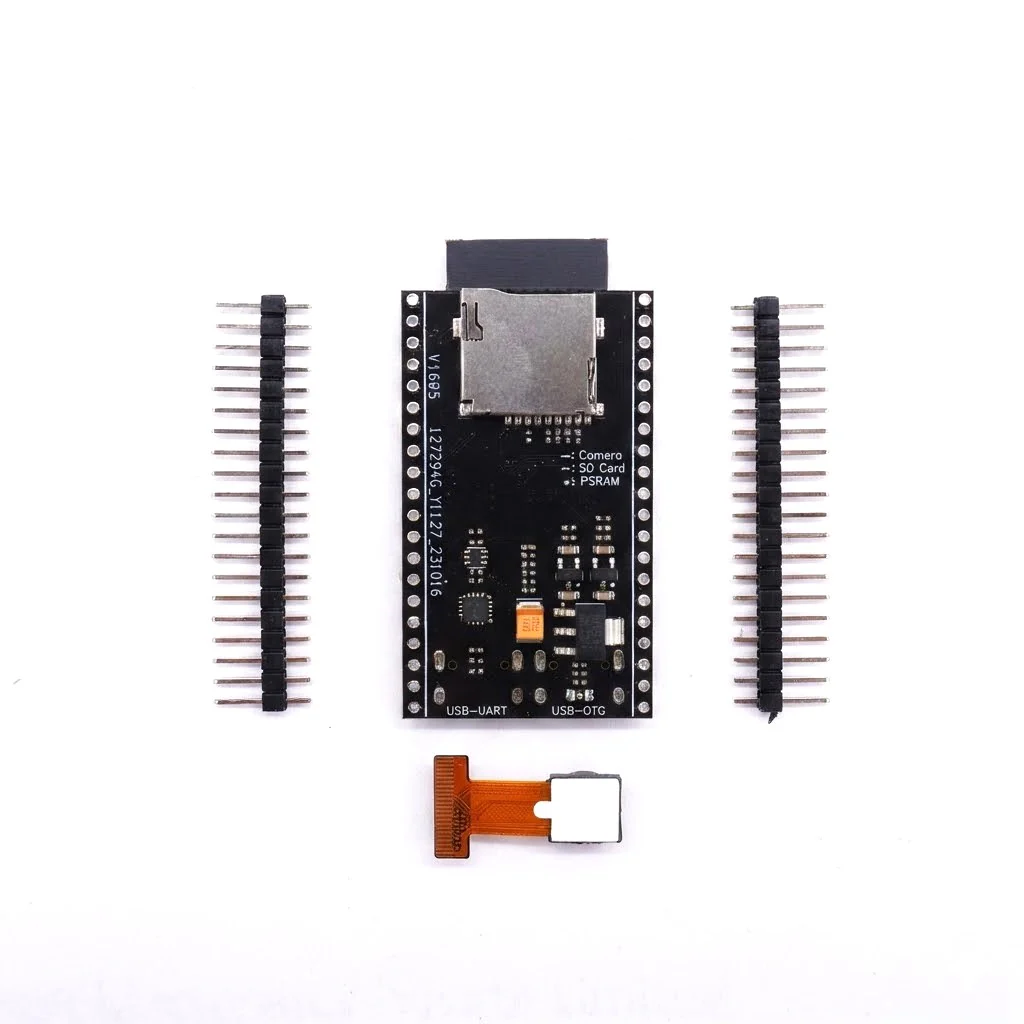
- 1 × N16R8 ESP32-S3 CAM Dual Type-C Development Board
- 1 × OV2640 2MP Camera Module
Pinout

Documentation
- ESP32-S3 Datasheet – Espressif (Official)
- ESP32-S3 Technical Reference Manual – Espressif
- OV2640 Camera Module Datasheet
How to Use (DIY Mini Blog)
Start by connecting the ESP32-S3 CAM board to your computer using a USB Type-C cable. Install the ESP-IDF or Arduino IDE with ESP32-S3 support. Once set up, you can load example codes for camera streaming or AI vision tasks. Connect the OV2640 module to the DVP interface, upload the sketch, and access the live video stream from a web browser or IoT dashboard. Within minutes, you’ll have a working WiFi-enabled camera project.
FAQ
- Q1: Does it support AI and machine learning?
A1: Yes, ESP32-S3 supports TensorFlow Lite Micro and hardware AI acceleration. - Q2: Can I stream live video?
A2: Yes, using the OV2640 camera and WiFi connection. - Q3: What IDEs are supported?
A3: ESP-IDF, Arduino IDE, PlatformIO. - Q4: Does it have USB-OTG?
A4: Yes, it supports USB OTG and Serial/JTAG debugging. - Q5: What is the maximum operating temperature?
A5: From -40°C to +65°C.



Reviews
There are no reviews yet.